• About
    • About Us
    • Our Services
    • Our Founder
  • Artists
  • Releases
  • Blog
  • Company Profile
  • Contact

Blog

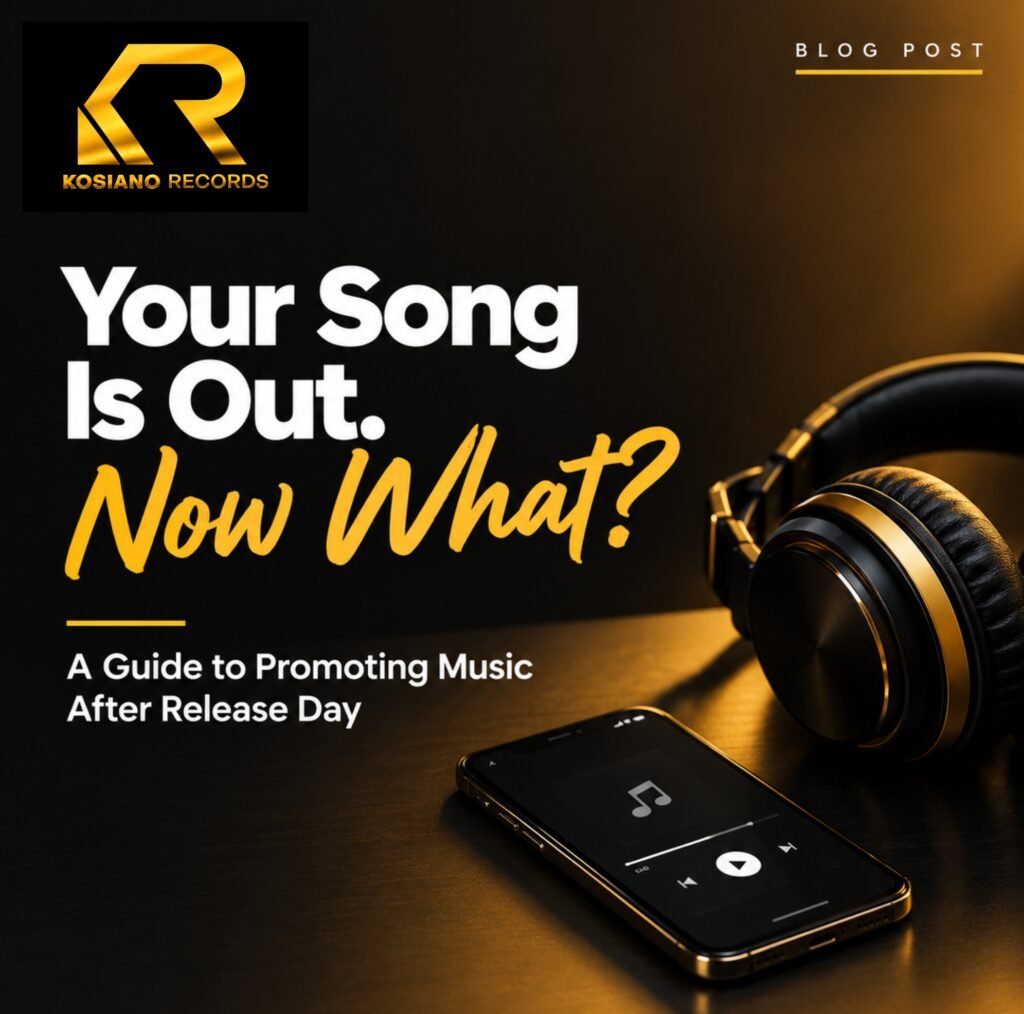
From the Studio to the World: How Music Distribution Works

October 24, 2026 by admin

A practical guide to getting your music onto streaming platforms, reaching listeners, and understanding what happens after a song leaves the studio.

A song can begin with a melody in someone’s head, a few lines written in a notebook, or an idea that comes alive during a studio session. After hours of writing, recording, production, mixing, and mastering, the music may finally be ready for the world to hear.

But finishing a song is only one part of the journey.

How does that recording get onto Spotify, Apple Music, Boomplay, Audiomack, YouTube Music, and other digital platforms? Who delivers the music? What information must an artist provide? And how does a release become available to listeners in different parts of the world?

The process behind these questions is called music distribution.

For independent artists, understanding distribution is an important step towards building a sustainable music career. It helps artists prepare releases properly, avoid preventable mistakes, maintain accurate catalogue records, and understand how their music reaches audiences.

Let’s explore how it works.

1. What Is Music Distribution?

Music distribution is the process of delivering a recording to platforms and services where people can listen to, watch, purchase, or otherwise access music.

In the past, distribution was strongly associated with physical formats such as vinyl records, cassette tapes, and CDs. Record labels and distributors helped move those products from manufacturing facilities to shops and, eventually, to listeners.

Today, digital distribution plays a major role in the music industry.

A digital music distributor acts as an intermediary between an artist or record label and participating music platforms. Depending on the distributor and the services it offers, it can deliver audio files, cover artwork, release information, and other required metadata to digital service providers.

These services may include streaming platforms, download stores, and certain video or social music services.

Once a release has been accepted and made available, listeners can access it through the relevant platforms in supported territories.

However, distribution is not the same as promotion. Getting a song onto a streaming platform makes it available; it does not automatically guarantee that people will discover it, add it to playlists, or listen to it.

That is why distribution should be part of a wider release strategy.

2. The Journey Begins Before the Upload

Before a song is delivered to a distributor, the artist or label should make sure the release is ready.

This involves more than exporting an audio file from the studio.

The final recording

The song should be properly mixed and mastered for release. The final audio must meet the distributor’s technical requirements, which may vary depending on the service and delivery format.

Artists should also confirm that the correct version is being submitted. An explicit version, clean version, instrumental, remix, and radio edit may require distinct release planning and accurate labelling.

Cover artwork

A release generally needs artwork that meets the distributor’s specifications. Requirements can include dimensions, file format, image quality, and restrictions on promotional text or logos.

The artwork should represent the release professionally and comply with the platform’s rules.

Release information

The artist or label must prepare the information that identifies and describes the release. This commonly includes:

  • Artist name and any featured artists
  • Song title and version information, where applicable
  • Release date
  • Genre and language, where requested
  • Songwriter and composer credits
  • Label and copyright information
  • Explicit-content status
  • Relevant recording and release identifiers

Accurate information matters. A spelling error, inconsistent artist name, or incorrect credit can create confusion across platforms and may require a correction after release.

The more carefully a release is prepared, the fewer avoidable problems are likely to arise during delivery.

3. What is a Digital Music Distributor?

A digital music distributor helps deliver music from the artist or label to digital platforms.

Some distributors primarily serve independent artists through self-service dashboards. Others offer label services, catalogue management, reporting, rights administration, or additional support depending on the agreement.

The exact arrangement varies. Some charge subscription fees, some deduct a percentage of earnings, and others use different pricing or service models.

When choosing a distributor, artists should look beyond the promise of getting music online.

Consider the following:

Platform coverage: Which streaming services and territories does the distributor support?

Pricing and deductions: Are there upfront fees, annual charges, commissions, or additional service costs?

Royalty reporting: How clearly can you review earnings, statements, adjustments, and payment history?

Release management: Can you schedule releases, update metadata, and manage multiple artists or a larger catalogue?

Customer support: What happens if a release is delayed, delivered incorrectly, or assigned to the wrong artist profile?

Rights and account access: Who controls the distribution account, and what happens to the catalogue if the agreement ends?

These questions are especially important for record labels managing music for more than one artist.

A distributor is not simply a button that sends music to streaming platforms. It is part of the infrastructure that supports the release and administration of a catalogue.

4. How Does a Song Get onto Streaming Platforms?

Although individual distributors have different systems, the process generally follows a similar sequence.

Step 1: Create the release

The artist or label prepares the final audio, artwork, credits, release date, and other required information.

Step 2: Submit it through the distributor

The release is uploaded through the distributor’s system. The user selects supported platforms and territories, where these options are available, and submits the required details.

Step 3: Review and delivery

The distributor processes the submission and delivers it to the selected platforms. A release may undergo technical, metadata, rights, or policy checks.

If something is incomplete or does not meet the applicable requirements, the release may need correction before it can proceed.

Step 4: Platform processing

Each platform processes the delivery according to its own systems and policies. Timelines can differ, so a release may not become available everywhere at exactly the same moment.

This is one reason artists should submit music well ahead of the intended release date, especially when planning a coordinated campaign.

Step 5: Confirm availability

After the release date, the artist or label should check that the music is live and correctly presented.

Confirm that the song appears under the intended artist profile, the title and artwork are correct, the credits are accurate, and the links lead to the right release.

If a problem appears, contact the distributor with the relevant release details rather than immediately uploading another copy.

The release process is not complete simply because an upload was submitted. Verification is part of release management.

5. Understanding ISRCs, UPCs, and Release Metadata

Music distribution involves identifiers that help distinguish recordings and releases. Two common identifiers are the ISRC and UPC or EAN.

What is an ISRC?

An International Standard Recording Code (ISRC) identifies a particular sound recording or music video recording.

It helps distinguish one recording from another in industry systems. If a song is distributed to multiple platforms, its recording identifier is an important part of maintaining consistent records.

Different versions of a song may need separate identifiers, depending on how the recordings differ and the applicable rules.

What is a UPC or EAN?

A UPC or EAN is generally used to identify a release or product, such as a single, EP, or album, within distribution and retail systems.

Think of it this way: an ISRC identifies a particular recording, while a UPC or EAN identifies the release package.

Why does this matter?

These identifiers can help artists and labels manage their catalogues, investigate delivery problems, compare distributor records, and keep track of releases over time.

They are particularly useful when transferring a catalogue between distributors or investigating why the same recording appears more than once on a streaming platform.

Artists and labels should keep a record of their identifiers and avoid creating unnecessary duplicate releases in an attempt to fix a delivery problem.

6. Choosing a Release Date and Planning Ahead

A release date is not just a detail entered into a distributor’s dashboard. It is a planning decision that affects the entire campaign.

Artists need time to prepare artwork, check credits, submit the release, confirm delivery, create promotional content, and communicate with their audience.

Submitting at the last minute can reduce the time available to correct mistakes or resolve delays.

A practical release timeline might include:

Several weeks before release: Finalise the recording, artwork, metadata, distribution plan, and promotional direction. Submit the release early enough to accommodate the distributor’s and platforms’ requirements.

Before release day: Prepare teasers, short-form videos, artist announcements, pre-save links where available, and other campaign materials.

On release day: Confirm availability, publish the announcement, share correct links, and direct listeners to the music.

After release: Continue promoting the song through performances, behind-the-scenes content, lyric highlights, audience conversations, and other relevant formats.

The exact timeline will depend on the distributor, the release, and the campaign. The important thing is to leave enough time for preparation and verification.

7. What Happens After the Music Goes Live?

Once a song is available, the work continues.

The artist and label should monitor the release, communicate with listeners, and review the information provided by their distributor and streaming platforms.

This includes checking for incorrect credits, profile problems, unexpected duplicates, missing platform availability, and other issues that may affect the release.

It also means looking at performance data.

Depending on the platform and the distributor’s reporting tools, artists may be able to review streams, listeners, audience locations, playlist activity, and earnings. Different services provide different metrics, and the information may not update immediately.

Use the available data to understand what is happening.

Are people finding the song through short-form videos? Are listeners returning to the artist’s catalogue? Are certain territories showing growing interest? Which promotional activities appear to be helping?

These insights can guide future decisions, but they should be interpreted carefully. A spike in views does not necessarily translate into the same increase in streams or revenue.

Distribution makes the release accessible. Monitoring helps the artist or label understand and manage what happens next.

8. How Do Artists Earn Money from Digital Distribution?

Digital music revenue can come from different sources, and it is important to understand what each one represents.

Recording revenue

Streaming services and other digital platforms operate under their own commercial arrangements. Money attributable to a recording may be paid through a distributor or another relevant rights arrangement, depending on the platform and the agreements in place.

The amount an artist receives is not necessarily a fixed rate for every stream. Earnings can vary based on factors such as platform, territory, subscription model, revenue pool, and the applicable contractual terms.

The distributor may also charge fees or retain an agreed share.

Songwriting and publishing royalties

The musical composition is distinct from the sound recording.

Songwriters, composers, and publishers may be entitled to royalties associated with the use of the composition, depending on the type of use, territory, ownership, registrations, and applicable agreements.

These royalties are not always collected through the same channel as recording revenue. Artists should understand which rights they control and which organisations or administrators, if any, manage them.

Other potential revenue streams

Depending on the recording, rights ownership, eligibility, territory, and relevant agreements, other income opportunities may include video monetisation, certain digital performance royalties, licensing, and other authorised uses of the music.

These systems have different rules. For example, royalties associated with certain non-interactive digital radio services are not the same as ordinary on-demand streaming revenue.

Being available on a streaming platform does not mean every possible royalty is automatically registered, collected, or paid to the correct person.

Artists and labels should maintain clear ownership records, understand their agreements, review statements, and investigate any unexplained discrepancies.

9. Common Music Distribution Mistakes to Avoid

A few preventable mistakes can make release management more complicated than it needs to be.

Uploading without checking the details

Incorrect titles, credits, artist names, artwork, and release information can create problems that take time to correct.

Waiting until the last minute

Late submissions can leave little time to fix delivery issues or prepare an effective campaign.

Assuming distribution guarantees promotion

A song can be available worldwide without receiving meaningful attention. Artists still need to build awareness, create content, connect with listeners, and pursue suitable promotional opportunities.

Ignoring the catalogue after release

Keep copies of release details, identifiers, agreements, and reports. These records become increasingly important as the catalogue grows.

Re-uploading a song to solve every problem

Uploading the same recording again may create duplicate listings or split listeners and reporting across multiple entries. Investigate the existing release and contact the responsible distributor before creating a replacement.

Overlooking rights and royalty administration

Confirm who owns the master recording, who wrote the composition, what the agreements say, and which parties are responsible for distribution and royalty collection.

Losing control of account access

Labels should know which account manages each release, who has permission to make changes, and how catalogue information can be retrieved if a working relationship ends.

Good distribution practice is about more than getting a song online. It is about keeping the release accurate, traceable, and manageable over time.

10. What Should Independent Artists and Record Labels Do Differently?

Artists and labels share many distribution responsibilities, but their priorities may differ.

An independent artist managing a small catalogue may focus on choosing a suitable distributor, preparing releases correctly, understanding their agreement, and tracking their own earnings.

A record label may need a more structured system.

For every release, the label should maintain a catalogue record containing the song title, artist, release date, ISRC, UPC or EAN, distributor, master ownership, songwriting information, royalty arrangements, platform links, and relevant account or reference details.

The label should also document release status, promotional plans, reporting periods, and unresolved issues.

As more artists and recordings are added, relying on memory or scattered messages becomes risky. A central catalogue record helps the label understand what it owns or administers, where each release is delivered, and how to follow up on problems.

For a label like Kosiano Records, distribution is one part of a connected digital operation. Artist development, social media, website content, release promotion, rights administration, and revenue monitoring all contribute to how music is managed from the studio to the listener.

Final Thoughts: Distribution Opens the Door

A finished song deserves a clear path to its audience.

Digital music distribution helps artists and record labels deliver their work to streaming platforms and other music services, but the process requires preparation, accurate metadata, careful release planning, and ongoing management.

Artists should understand the role of their distributor, keep reliable catalogue records, check releases after delivery, and learn how recording revenue differs from songwriting and other rights-related income.

Most importantly, they should remember that distribution and promotion work together. Making a song available creates an opportunity. Building awareness and connecting with listeners help that opportunity grow.

The journey doesn’t end when the recording leaves the studio.

That is where its journey to the world begins.

Discover Music from Kosiano Records

Kosiano Records is committed to supporting music through thoughtful release management, digital presence, and intentional promotion.

Discover Winny Uche, Kosiano Records’ Gospel artist, and experience her release “Ojichukwu Chants,” a song centred on praise, gratitude, and trust in God.

Explore the artist and listen to the song through Kosiano Records’ official website and social channels. You can also watch the official music video through the label’s YouTube channel.
Your Song Is Out. Now What? A Guide to Promoting Music After Release Day

October 17, 2026 by admin

A practical guide to building momentum, finding listeners, and turning a music release into the beginning of something bigger.

A song has finally been released.

The cover artwork is live. The streaming links are working. The announcement has gone up on social media, and friends, family, and early supporters are beginning to share it.

For a moment, it feels like the biggest part of the journey is over.

But what happens the next day?

What should an artist do during the first week? How can a song reach people beyond the artist’s immediate circle? And how do you turn a release announcement into genuine music discovery?

These are important questions because releasing music and promoting music are two different things.

A distributor can deliver your song to streaming platforms, but delivery alone does not guarantee discovery. An announcement can tell people your music exists, but it doesn’t automatically give them a reason to listen, share it, or come back for more.

The release isn’t the finish line.

It’s the beginning of the campaign.

1. Don’t Disappear After Release Day

One of the most common mistakes artists make is treating release day as the entire promotional campaign.

They post the cover artwork, announce that the song is out, share a streaming link, and then move on to the next thing.

The problem? Not everyone sees the announcement.

Some followers might miss the post. Others might see it but be too busy to listen. Some may need to hear a preview before becoming interested. And others might discover the song days or weeks later.

This is why music promotion needs continuity.

Instead of treating a release as a single announcement, think of it as a story that unfolds over time.

You could share a short performance clip on one day, explain the meaning behind a lyric on another, and publish a behind-the-scenes moment later in the week.

The aim isn’t to repeat the same message endlessly. It’s to give people different reasons to discover and experience the music.

Remember: release day introduces the song. What you do afterwards helps keep it in circulation.

2. Give People a Reason to Care About the Song

People don’t connect with music through links alone. They connect through feelings, stories, experiences, and moments they recognize.

Before promoting a song, ask yourself:

  • What inspired it?
  • What does it mean to me?
  • What feeling does it communicate?
  • Who might connect with its message?
  • Is there a lyric, melody, or musical moment that deserves special attention?

Your answers can become the foundation of your campaign.

For a song about perseverance, you might create content about continuing through difficult seasons. For a love song, you might explore the feeling or memory behind it. For a Gospel song, you could share the testimony, gratitude, or message of faith that inspired the music.

The song becomes more than an audio file. It becomes an experience people can understand and connect with.

A real example: Winny Uche’s “Ojichukwu Chants”

Consider “Ojichukwu Chants” by Winny Uche, Kosiano Records’ latest release.

The song’s message of praise, gratitude, and dependence on God offers several ways to connect with listeners beyond simply announcing its availability.

Content could explore what gratitude means in everyday life, invite listeners to share what they’re thankful for, or highlight a meaningful musical passage from the release.

These ideas give the audience an entry point into the music before inviting them to listen.

Discover more from Kosiano Records: Explore Winny Uche and experience Ojichukwu Chants. Find the artist and release through Kosiano Records’ official website and social channels.

3. Turn One Song Into Multiple Pieces of Content

A song takes time to create, so its promotional life shouldn’t end after a handful of posts.

You don’t need an entirely new idea every day. Instead, identify different angles within the same release.

Here are some ways to do that:

The hook: Share the most memorable lyric, melody, or musical moment in a short video.

The story: Explain what inspired the song or what a particular line means.

The performance: Record a live rendition, acoustic version, rehearsal, or stripped-down performance.

The process: Share footage from the studio, songwriting sessions, rehearsals, or music video shoot.

The audience: Ask listeners what they think about a lyric, which part resonates with them, or how the song makes them feel.

The visual experience: Share a music video scene, a lyric visual, or a short vertical edit.

Each piece of content serves a different purpose. Some introduce the song, some build a relationship with the artist, and others encourage people to listen to the full release.

The important thing is to make every post feel intentional.

4. Use Short-Form Video to Create Discovery Opportunities

Short-form video gives artists a way to introduce their music in a format people already enjoy consuming.

Instagram Reels, TikTok, YouTube Shorts, and Facebook Reels can all provide opportunities to reach people who don’t yet follow the artist.

But simply adding a song to a video isn’t enough. The clip needs an interesting opening and a reason for viewers to keep watching.

Try starting with a question, a relatable situation, a striking lyric, or a captivating performance moment.

For example:

  • “Have you ever had a reason to thank God that words couldn’t explain?”
  • “Listen closely to this part of the song.”
  • “What does gratitude mean to you?”
  • “This lyric deserves a moment of reflection.”

Then let the music deliver the experience.

Keep the clip focused, use clear on-screen text where helpful, and make the next step obvious. If the goal is to drive full-song listens, direct viewers to the streaming link. If the goal is to promote a music video, direct them to the full video on YouTube.

Avoid assuming that every video will go viral. The goal is to create repeated opportunities for discovery and learn which formats connect with your audience.

5. Make It Easy for People to Find Your Music

Imagine someone discovers a short clip, enjoys the music, and decides to listen to the full song.

What happens next?

If they have to search through multiple profiles, guess which release is correct, or navigate a confusing bio link, you may lose their interest.

Make the journey as simple as possible.

Check that:

  • Your streaming links lead to the correct release.
  • Your artist profiles are accurate and easy to identify.
  • Your social media bio points to a useful destination.
  • Your music video is clearly linked where applicable.
  • Your artist name, song title, artwork, and release information are consistent.
  • Your posts include a clear call to action.

A single landing page with the correct streaming options can be useful when music is available across multiple services.

For a music video campaign, use a direct YouTube link whenever possible. For streaming promotion, direct people to the release or a reliable music-link page.

The fewer unnecessary steps between discovery and listening, the better.

6. Give Your Audience a Reason to Participate

Promotion doesn’t have to be a one-way conversation.

Artists can invite listeners into the experience by asking questions, encouraging interpretations, sharing reactions, or creating simple challenges around the music.

For example:

  • “Which lyric stood out to you the most?”
  • “What does this song remind you of?”
  • “Who would you share this song with?”
  • “What is one thing you’re grateful for today?”
  • “Have you watched the official video yet?”

These questions give people something to contribute beyond liking a post.

When listeners comment, respond genuinely. Thank people for sharing the song, answer questions, and acknowledge thoughtful responses.

Where appropriate, ask permission before reposting someone’s personal story or content.

Over time, these interactions can help turn passive viewers into active supporters.

The goal is not to manufacture engagement. It’s to build a genuine relationship with people who connect with the music.

7. Collaborate Beyond Your Existing Audience

Your current followers are important, but they aren’t the only people who might enjoy your music.

Think about creators, musicians, dancers, content pages, DJs, bloggers, presenters, and communities whose audiences might connect with your release.

A collaboration doesn’t always need a large budget.

A creator might use a short section of your song in an appropriate video. Another musician might perform a version of it. A music blogger might feature the release. A relevant community page might introduce the song to its audience.

The key is relevance.

Choose collaborators whose content and audience genuinely fit the music. Make the request specific, provide the correct audio or links, and agree on expectations before a partnership begins.

Also remember that a collaboration is not a guarantee of streams. Its value depends on the audience, the content, and what listeners do afterwards.

8. Track More Than Views

It is easy to get excited when a post receives hundreds or thousands of views. But views alone don’t tell you whether a campaign is helping people discover the music.

Look at several indicators together.

Reach and views: Are new people encountering the content?

Engagement: Are people commenting, sharing, saving, or responding?

Profile visits and link clicks: Are viewers taking the next step?

Streaming activity: Are listeners, streams, and saves changing during the campaign?

Audience growth: Are more people following the artist or returning to their music?

Video performance: Are viewers watching the music video, and how long are they staying?

Use the analytics available on each platform, alongside distributor reports and streaming dashboards.

Compare similar posts to identify patterns. If performance clips consistently attract stronger responses than static artwork, consider making more performance-led content.

If people watch your videos but rarely click through to the full song, reconsider the call to action and the route to the music.

Data should help you make better creative decisions, not replace creativity.

9. Protect the Business Behind the Music

There is another part of release management that often receives less attention: the administrative work behind the catalogue.

Make sure you know who owns the master recording, who wrote the composition, what agreements apply, and which distributor is responsible for delivering the release.

Keep accurate records of the song title, artist credits, ISRC, release identifiers, ownership information, and royalty arrangements.

Monitor your distributor reports and investigate unusual issues, such as duplicate releases or music appearing under the wrong artist profile.

Where applicable, review publishing and neighbouring-rights arrangements separately from the royalties paid through your distributor.

These processes may not be visible to listeners, but they are part of managing a music career responsibly.

A promotional campaign can help people discover your work. Proper rights administration helps you manage the value of that work.

10. Build a Post-Release Plan

You don’t need a complicated campaign to start. You need a plan you can execute consistently.

Here’s a simple example of how the first two weeks might look.

Release day: Publish the main announcement and share the correct streaming or video links.

Days 2–3: Share a short music clip highlighting a memorable moment.

Days 4–5: Publish the story behind the song, a lyric explanation, or behind-the-scenes footage.

Days 6–7: Invite listeners to share their favourite part and respond to comments.

Week 2: Test a different video angle, collaborate with a relevant creator, share audience reactions with permission, or post a live performance.

Throughout the campaign, monitor performance and adjust your approach.

This is a framework, not a rigid schedule. Some releases may need a longer campaign, and some content may perform best when adapted to the artist’s audience.

The principle is simple: keep creating meaningful opportunities for people to encounter the music.


Final Thoughts: Release Music, Then Build Momentum

A successful release campaign isn’t just about posting more often. It’s about helping the right people discover a song, giving them reasons to care about it, and making it easy for them to listen.

That requires creativity, consistency, audience understanding, effective digital distribution, and attention to the business behind the music.

One song can produce many stories, conversations, performances, and discovery opportunities.

So when your next release goes live, don’t stop at the announcement.

Ask yourself what you can do next to bring the music to more people.

Because release day introduces the music. The work that follows gives it more opportunities to be heard.

Discover Music from Kosiano Records

At Kosiano Records, we believe music deserves thoughtful presentation, intentional promotion, and opportunities to connect with listeners.

We’re building a catalogue of music that brings together artists, stories, and distinctive sounds.

Meet Winny Uche

Discover the artist behind the music and explore her work through Kosiano Records’ official channels.

Listen to “Ojichukwu Chants”

Take a moment to experience Winny Uche’s latest release, a song centred on praise, gratitude, and faith.

Find Ojichukwu Chants on its available streaming platforms, or watch the official video on YouTube through the links on Kosiano Records’ website and social media.

Why Every Artist Needs More Than a Good Song

October 3, 2026 by admin

A great song can open the door. But what happens after people hear it?

There is a common belief in music that if an artist makes a great enough song, everything else will somehow fall into place.

  • The song will go viral.
  • People will discover the artist.
  • Streaming numbers will grow.
  • Fans will arrive.
  • Opportunities will follow.

Sometimes, something close to that happens.

But most of the time, it doesn’t.

The reality of today’s music industry is that a good song is only the beginning.

An artist can have an incredible voice, a beautifully written song and excellent production, yet still struggle to build an audience. Not necessarily because the music isn’t good, but because there is much more involved in turning a song into a career.

Music has to be discovered.

The artist has to be understood.

The audience has to have a reason to care.

And the systems behind the music have to be properly managed.

In an industry where millions of songs are released every year, artists need more than music. They need identity, strategy, consistency, visibility and a connection with their audience.

1. A Good Song Needs an Identity

Before people become fans of an artist, they need to know who that artist is.

What does the artist represent?

What kind of music do they make?

What makes their story interesting?

What do they want people to feel when they experience their music?

This is where artist identity becomes important.

Identity is more than a logo, a hairstyle or a particular colour palette. It is the combination of an artist’s sound, personality, story, values, appearance and creative direction.

Think about the difference between hearing a song and knowing the person behind it.

A song may make someone say:

“This is a great song.”

But a strong artist identity can make them say:

“I want to hear more from this artist.”

That distinction matters.

2. Great Music Needs a Story

People don’t only connect with songs.

They connect with stories.

Why was the song written?

What inspired it?

What was happening in the artist’s life?

What does a particular lyric mean?

What does the song represent?

These questions give an audience something to connect with beyond the audio itself.

A song about gratitude, for example, becomes more meaningful when listeners understand the experience, belief or story that inspired it.

The story doesn’t have to be complicated.

Sometimes the simplest stories are the most powerful.

The important thing is that there is something real for people to connect with.

3. Visibility Matters

A great song cannot connect with an audience if nobody knows it exists.

This sounds obvious, but it is one of the biggest challenges facing emerging artists.

Releasing a song is not the same thing as promoting a song.

Uploading music to streaming platforms is an important step, but it doesn’t automatically create an audience.

Artists have to create opportunities for people to discover their music.

That can happen through:

  • Social media
  • Short-form video
  • Music videos
  • Performances
  • Interviews
  • Collaborations
  • Playlists
  • Blogs and publications
  • Radio
  • Influencer and creator partnerships
  • Community engagement
  • Live events

The goal isn’t simply to tell people “My song is out.”

The goal is to give people multiple reasons and opportunities to discover the song.

4. An Artist Needs a Digital Presence

Today, an artist’s digital presence is often the first place people encounter them.

Someone hears a song and searches for the artist.

What do they find?

Is the artist’s Instagram active?

Does the artist have a professional profile?

Is there a clear visual identity?

Can people easily find their music?

Is the artist’s YouTube channel properly presented?

Are their streaming profiles accurate?

Does the content tell people anything about who they are?

These details matter because an artist’s digital presence becomes part of their public identity.

A great song might get someone to search for you.

Your digital presence can determine what they discover when they arrive.

5. Visuals Are Part of the Music

Music may be heard, but artists are increasingly discovered visually.

Cover artwork.

Music videos.

Photography.

Social media graphics.

Short-form video.

Performance clips.

Behind-the-scenes footage.

Artist branding.

All of these contribute to how audiences perceive an artist.

This doesn’t mean everything has to be expensive.

It means it should be intentional.

A song can have a beautiful visual world around it that strengthens the listener’s understanding of the music.

The visual identity can communicate the mood of a release before someone even presses play.

In an increasingly visual digital environment, that matters.

6. Consistency Builds Recognition

One song can introduce an artist.

Consistency can build an audience.

An artist doesn’t necessarily need to post every day. But disappearing between releases makes it difficult to build a lasting connection with an audience.

There should be something happening between releases:

Music.
Stories.
Personality.
Performances.
Behind-the-scenes moments.
Conversations.
Creative content.

The audience should have opportunities to experience the artist beyond the three or four minutes of a song.

This is especially important because music careers are rarely built around one release.

A single can create attention.

An ongoing body of work and consistent presence can turn that attention into a community.

7. Artists Need to Understand Their Audience

Not everyone who hears a song will become a fan.

And that’s okay.

The important question is:

Who is the music actually for?

Understanding an audience helps an artist make better decisions about content, communication and promotion.

For example, an artist may discover that their audience responds particularly well to:

  • Live performances
  • Emotional storytelling
  • Behind-the-scenes content
  • Short music clips
  • Inspirational messages
  • Dance or performance videos
  • Educational content

Data can help reveal these patterns.

Social media analytics, streaming statistics and audience behaviour can tell artists what people are responding to.

The purpose isn’t to become obsessed with numbers.

It’s to understand the people behind the numbers.

8. Distribution and Catalogue Management Matter

There is also a side of the music business that audiences rarely see.

The song needs to reach the platforms correctly.

Metadata needs to be accurate.

Artist profiles need to be properly connected.

ISRCs need to be managed.

Release information needs to be organized.

Royalties need to be tracked.

Ownership and rights need to be documented.

Multiple versions of a release need to be monitored.

A song can be creatively brilliant and still have administrative problems behind it.

That is why artists and labels need proper digital music distribution and catalogue management.

The creative side of music may get the attention, but the administrative side helps protect and manage the value of the work.

9. Artists Need to Think Beyond Streaming

Streaming is important, but an artist’s career can involve much more than streams.

There are opportunities in:

  • Live performances
  • Events
  • Brand partnerships
  • Synchronization
  • Merchandise
  • Collaborations
  • Publishing
  • Licensing
  • Digital content
  • Sponsorships
  • Fan communities

A song can be the starting point for many different opportunities.

This is why artists should think about their music not only as something they release, but also as an intellectual property asset and part of a larger creative brand.

10. Community Is More Valuable Than Attention

There is a difference between getting attention and building an audience.

Someone can watch a video and scroll away.

Someone else can discover the artist, follow them, listen to every release, attend their shows, share their music and tell their friends about them.

The second relationship is much deeper.

Artists should therefore think beyond:

“How many people saw this?”

And also ask:

“How many people connected with this?”

A strong community gives an artist something that algorithms cannot guarantee.

People who care about the music become part of the journey.

11. The Artist Still Has to Be the Artist

With all this talk about branding, strategy, social media and marketing, there is one important thing to remember:

The music still matters.

Strategy cannot permanently replace substance.

An artist can have beautiful graphics, an excellent social media presence and a strong marketing campaign, but if there is no meaningful artistic foundation, it becomes difficult to build something lasting.

The goal isn’t to distract from the music.

The goal is to help the music reach the people who need to hear it.

Artist development should therefore bring together both sides:

Great music + great presentation.

Creativity + strategy.

Authenticity + professionalism.

Art + business.

The Song Is the Beginning, Not the Entire Journey

A great song is still incredibly important.

It can change someone’s mood.

Tell a story.

Create a memory.

Introduce a new artist.

Open a door.

Start a movement.

But the song is only one part of the journey.

Behind it is an artist with a story.

Around it is a visual identity.

In front of it is an audience.

Behind the scenes are distribution, rights, royalties and business decisions.

And beyond the release is the long-term work of building a career.

The modern artist therefore has to think bigger than the next release.

Don’t just ask, “How do I make a great song?”

Ask:

Who am I as an artist?

Who am I making music for?

How will they discover me?

What will make them stay?

What story am I telling?

How do I turn one listener into a community?

Because a good song can get someone to press play.

But a great artist gives them a reason to press play again.


At Kosiano Records

At Kosiano Records, we believe artists deserve more than simply having their music released.

Music deserves the right strategy, presentation, distribution, audience development and digital management to give it the opportunity to reach the people it was created for.

The goal isn’t simply to release music.

It is to help build artists, stories and lasting musical identities.

The Importance of Music in the Gospel

September 26, 2026 by admin

Why music has always been more than sound—it is a language of worship, a vessel for truth, and a way of carrying the Gospel into the hearts of people.

There are moments when words alone do not seem to be enough.

Sometimes, gratitude becomes a melody.
Sometimes, pain becomes a song.
Sometimes, faith finds its voice through music.

Long after we have forgotten the exact words of a conversation, we may still remember the song that accompanied a significant moment in our lives. A melody can take us back to a place, a season, a person, or an experience in an instant.

This is one of the remarkable things about music.

And within the Gospel, music has always held a particularly important place.

From the songs of praise found throughout Scripture to the hymns sung by the early Church, from traditional African worship to contemporary Gospel music, music has continually served as a way for people to express their faith, proclaim God’s goodness, encourage one another, and tell the story of what they believe.

But why is music so important to the Gospel?

Music Gives Praise a Voice

At its simplest, music gives expression to what is happening in the heart.

When someone is grateful, they may sing. When someone is celebrating, they may dance. When someone is overwhelmed by God’s goodness, praise can become almost impossible to keep inside.

The Bible repeatedly connects music with praise and thanksgiving.

The Psalms are filled with invitations to sing, shout, make music, and give thanks to God. Psalm 96:1 says:

“Sing to the LORD a new song; sing to the LORD, all the earth.”

Music allows people to turn gratitude into an audible expression.

Instead of simply thinking, “God has been good to me,” a person can sing it.

Instead of silently remembering an answered prayer, they can turn that testimony into a melody that someone else can hear.

This is one reason Gospel music remains so powerful: it gives praise a voice.

Music Carries the Message

Music is not only about melody. It is also about words.

A Gospel song can communicate biblical truths, tell stories, encourage believers, proclaim God’s character, and remind listeners of the hope found in Christ.

A powerful lyric can stay with someone throughout an ordinary day.

A person may hear a line in a song while driving, working, exercising, or relaxing at home—and hours later, that same line may still be in their mind.

This gives Gospel music an unusual opportunity.

The message does not have to remain inside the walls of a church building.

It can travel.

Through a pair of headphones.
Through a phone speaker.
Through a radio.
Through a playlist.
Through a social media video.
Through a live performance.

Music can carry a message farther than the place where it was first sung.

Music Helps Us Remember

Have you ever forgotten an entire conversation but remembered the chorus of a song from years ago?

There is something about the combination of words and melody that makes information remarkably memorable.

This matters in Gospel music because the songs we sing can become reminders of what we believe.

A lyric about God’s faithfulness can come back to us during a difficult season.

A song about gratitude can remind us to give thanks.

A song about hope can encourage us when circumstances feel uncertain.

A worship song can become part of someone’s personal prayer.

In this way, music can become a kind of spiritual memory.

It gives people words to return to.

Music Connects Faith With Emotion

Faith is not merely an intellectual exercise.

Christianity speaks to the whole person — mind, heart, spirit, and life.

Music has a unique ability to engage emotion.

The same biblical truth can be communicated in a sermon, written in an article, or sung in a melody, yet each form can affect us differently.

Music can create space for reflection.

It can help someone process grief.

It can accompany celebration.

It can express joy.

It can create an atmosphere of worship.

This does not mean emotion replaces truth. Rather, music can help people experience and respond to truth in a deeply personal way.

That is part of what makes Gospel music so meaningful.

The Beauty of Indigenous Gospel Music

Gospel music does not have to sound the same everywhere.

The Gospel is universal, but the ways people express their faith are deeply connected to culture, language, history, and community.

This is particularly evident in Nigeria.

Nigeria has a rich musical heritage, and its many languages and cultures provide countless ways of expressing praise and worship.

Igbo Gospel music, Yoruba Gospel music, Hausa Gospel music, and Gospel music expressed in other Nigerian languages all demonstrate something beautiful:

Faith can speak in the language of the people.

For many listeners, hearing worship expressed in their mother tongue creates a powerful sense of familiarity and connection.

An indigenous Gospel song can carry not only a message but also a cultural identity.

The rhythm, language, instrumentation, vocal expression, and storytelling can communicate something that feels deeply familiar to the listener.

This is not about choosing between indigenous and contemporary sounds.

It is about recognizing that Gospel music can take many forms while carrying the same central message of faith.

Music Brings Culture and Faith Together

One of the most interesting things about music is its ability to preserve culture.

Songs can carry language from one generation to another. They can preserve expressions, rhythms, stories, and traditions.

When Gospel music embraces indigenous languages and musical expressions, it can become a meeting point between faith and culture.

This is especially important in an increasingly global digital world.

A song recorded in Nigeria can now be heard by someone thousands of kilometres away.

An Igbo Gospel song can reach listeners in Lagos, Abuja, Enugu, London, New York, Johannesburg, or anywhere else in the world where people have access to digital music.

Technology has made the world smaller.

Music helps us bring our identity with us.

Gospel Music Can Reach Beyond the Church

Perhaps one of the biggest changes in the modern music landscape is where people discover music.

People no longer have to physically attend a church service to encounter a Gospel song.

They can discover it on Spotify.

They can hear it on YouTube.

They can come across it on TikTok or Instagram.

They can receive it through a friend’s WhatsApp status.

They can add it to a playlist and listen to it privately.

This creates an enormous opportunity for Gospel artists.

A song can enter someone’s life in an unexpected moment.

Someone who has never heard the artist before can discover a song through a recommendation, a short video, a playlist, or a social media post.

That means Gospel music can serve as a bridge.

It can take the message into spaces where a traditional church service may never reach.

The Responsibility of the Gospel Artist

With that opportunity comes responsibility.

Gospel music is still music. It should be created with creativity, excellence, intentionality, and artistic quality.

But when an artist identifies their music as Gospel, the message matters too.

The lyrics matter.

The integrity of the artist matters.

The authenticity of the worship matters.

The intention behind the music matters.

Excellence and spirituality do not have to compete with each other.

A Gospel artist can care deeply about songwriting, production, musicianship, visuals, performance, branding, and digital distribution while remaining committed to the message behind the music.

In fact, excellence can help the message travel further.

A beautifully written song with a meaningful message can reach someone who may never have intentionally searched for Gospel music.

Music as Ministry and as Art

There is sometimes a tendency to think that Gospel music must choose between being ministry and being art.

It does not.

It can be both.

A song can be musically beautiful and spiritually meaningful.

It can have strong songwriting and a powerful message.

It can honour God while also demonstrating creativity.

The best Gospel music often reminds us that creativity itself can be an expression of what God has placed inside people.

Every generation finds new ways to sing.

New sounds emerge.

New instruments are introduced.

New production techniques develop.

New platforms change how people discover music.

Yet the fundamental purpose remains familiar: to express faith, communicate truth, and point people toward God.

Why Gospel Music Still Matters

In a world filled with noise, music gives people something to hold on to.

A song can remind someone to hope.

A song can remind someone to give thanks.

A song can tell a testimony.

A song can preserve a culture.

A song can start a conversation.

A song can become part of someone’s prayer.

And sometimes, a song can simply help someone remember that they are not alone.

That is why Gospel music matters.

It is more than entertainment.

It is more than a genre.

It can be an expression of worship, a vehicle for truth, a keeper of memories, a celebration of culture, and a means through which the message of the Gospel continues to find its way into people’s lives.

From the ancient songs of Scripture to the indigenous sounds of African Gospel music, from church choirs to headphones and streaming platforms, the story continues.

People are still singing.

People are still worshipping.

And through music, the Gospel continues to find a voice.


At Kosiano Records

At Kosiano Records, we believe music has the power to carry stories, culture, faith, and meaningful experiences across borders and generations.

As the Nigerian music landscape continues to evolve, we believe there is room for music that is creative, authentic, culturally rooted, and intentional.

Because sometimes, a message needs more than words.

Sometimes, it needs a song.

How Artists Can Build a Loyal Fanbase Before They Become Famous

August 20, 2026 by admin

For many upcoming artists, the dream is simple: become famous, get millions of streams and have thousands—or even millions—of people listening to their music.

But there is an important step that often gets overlooked:

You need people to care about you before you become famous.

A loyal fanbase doesn’t magically appear after an artist becomes successful. In many cases, it is the loyal fans who help create that success in the first place.

You don’t need millions of followers to start building a fanbase. You need a small group of people who genuinely connect with your music, personality and story—and who are willing to support you consistently.

Here are practical ways to start building that community before the fame comes.

1. Give People a Reason to Follow You

People don’t follow artists simply because they release music.

They follow artists because they connect with something.

It could be your music, personality, story, lifestyle, message, humour, fashion, culture or the way you make them feel.

Ask yourself:

Why should someone become a fan of me instead of simply listening to my song and moving on?

Your answer becomes part of your artist identity.

Don’t be afraid to show people who you are beyond the music.

Share your journey. Show your personality. Talk about your inspirations. Let people see the work behind your songs.

People listen to songs, but they often become fans of the person behind them.

2. Stop Chasing Followers and Start Building Relationships

Having 10,000 followers doesn’t necessarily mean you have 10,000 fans.

Some followers may never listen to your music or interact with your content.

Instead of focusing only on follower counts, pay attention to the people who consistently support you.

Reply to comments. Respond to messages. Thank people who share your music. Acknowledge your supporters.

When someone feels noticed and appreciated, they are more likely to develop a genuine connection with your career.

Your first 100 true fans can be more valuable than your first 10,000 passive followers.

3. Create Content, Not Just Announcements

One of the biggest mistakes emerging artists make on social media is turning their pages into announcement boards.

Every post becomes:

“New song out now.”

“Stream my new single.”

“My song is available everywhere.”

That’s important, but it cannot be all you post.

Give people content they actually want to consume.

You can share:

  • Behind-the-scenes studio moments
  • Short performances
  • Freestyles
  • Songwriting sessions
  • Music-related opinions
  • Funny or entertaining moments
  • Your daily creative process
  • Stories behind your songs
  • Challenges and trends
  • Collaborations
  • Live sessions
  • Personal milestones

Your music should remain at the centre of your content, but your content should give people more reasons to stay connected to you.

4. Make Your Fans Feel Like They’re Part of the Journey

Don’t wait until you become successful before involving your audience.

Let them experience the journey with you.

Ask them which song they prefer. Give them previews of upcoming music. Let them see snippets from recording sessions. Share your wins and even some of the challenges you’re facing.

You can even give your supporters a name or create a community around your artist brand.

The goal is to make people feel like they aren’t simply watching your career—they are experiencing it with you.

Imagine someone discovering you when you have only 500 followers and staying with you until you have 500,000.

That person is not just a follower.

They’re part of your story.

5. Be Consistent

You don’t need to post 10 times every day.

But you do need to remain active enough that people don’t forget you exist.

Consistency helps your audience become familiar with you.

If you disappear for three months after releasing a song, it becomes harder to maintain momentum.

Create a realistic schedule that you can maintain.

For example:

  • Regular social media content
  • Occasional live sessions
  • Consistent music releases
  • Behind-the-scenes content
  • Fan engagement
  • Performance clips

Consistency doesn’t mean doing everything at once.

It means showing up repeatedly over time.

6. Give Your Fans Something to Share

One of the best ways to grow an audience organically is to create content that your existing fans want to share.

This could be:

  • A catchy song
  • A memorable lyric
  • A funny video
  • A powerful performance
  • A relatable story
  • A unique challenge
  • An inspiring message

Don’t always ask people to “share my song.”

Instead, create something that makes them want to share it.

Your fans can become one of your most powerful promotional tools.

7. Perform Whenever You Can

Social media is powerful, but don’t forget the real world.

Perform at events, shows, schools, churches, clubs, community gatherings and other appropriate platforms where your audience may be present.

Live performances allow people to experience your personality and energy directly.

Someone who watches you perform live may become a much stronger supporter than someone who simply hears one of your songs on a streaming platform.

Every performance is an opportunity to turn strangers into listeners—and listeners into fans.

8. Collaborate With Other Artists and Creators

You don’t have to build your audience alone.

Collaborating with other artists, producers, dancers, content creators and influencers can introduce your music to people who have never heard of you.

But don’t approach collaborations only as a way to “get followers.”

Find people whose audience, creativity or musical style genuinely connects with yours.

A good collaboration can introduce you to a completely new community while giving both audiences something valuable.

9. Take Your Existing Fans Seriously

If you currently have 50 genuine supporters, don’t treat them as insignificant because another artist has 50,000.

Those 50 people are your starting community.

Talk to them.

Thank them.

Learn what they like.

Listen to their feedback.

Make them feel appreciated.

If you can build a strong relationship with 50 people, you can learn how to build one with 500—and eventually 5,000.

Growth starts with the audience you already have.

10. Give It Time

Building a loyal fanbase is not an overnight process.

You may release a song that gets very little attention.

A video may get 100 views.

A performance may have a small crowd.

That’s part of the journey.

Don’t measure your entire career by one post, one song or one week.

Instead, focus on gradually increasing the number of people who know you, listen to you and care about what you are doing.

Fame can happen quickly.

Loyalty usually takes time.

Final Thoughts

You don’t need to become famous before you start building your fanbase.

Start with the people who are already listening.

Give them good music. Give them a reason to connect with you. Communicate with them. Create content consistently. Invite them into your journey. Appreciate their support.

Your first fans may not have millions of followers themselves, but they can become the people who share your music, attend your shows, recommend you to their friends and continue supporting you as your career grows.

So don’t wait for fame to build your audience.

Build your audience—and let them help build your career.

For Emerging Artists

If you’re an independent artist looking for opportunities to take your career to the next level, building a genuine fanbase is one of the most valuable things you can do before approaching a record label.

Your numbers don’t have to be huge.

Your audience simply needs to be real, engaged and growing.

How to Submit Your Demo to Kosiano Records

August 20, 2026 by admin

Are you an independent artist looking for a record label to help take your music to the next level?

If you believe your music could be a good fit for Kosiano Records, you can submit your demo for consideration.

Kosiano Records is open to discovering talented artists and new sounds. However, submitting your music properly can make the process easier for both the artist and the label.

Here’s everything you need to know before sending your demo.

Step 1: Make Sure Your Music Is Ready

Before submitting your music, take a moment to listen to it critically.

Don’t submit a song simply because you recorded it. Make sure the song is properly recorded, mixed and mastered—or at least presented at a quality level that allows the label to properly evaluate your talent.

Ask yourself:

  • Is the recording clear?
  • Is the song properly mixed?
  • Does the song represent my current sound?
  • Is this one of my strongest songs?
  • Does the song have potential to connect with an audience?

Quality matters.

You don’t need an expensive studio or a huge production budget to submit your music, but the label should be able to hear your talent clearly.

Step 2: Choose Your Best Song

If you’re submitting a demo, don’t send every song you’ve ever recorded.

Start with your strongest material.

If you have multiple songs that demonstrate different sides of your artistry, you can include a small selection. However, avoid overwhelming the person reviewing your submission with dozens of tracks.

Give us your best first impression.

Step 3: Prepare Your Demo

Kosiano Records accepts demos in the following format:

Preferred audio format: MP3

You may also submit a SoundCloud link or another accessible streaming link where applicable.

Make sure any links you send work properly and that the music can be accessed without unnecessary restrictions.

If you’re sending a private SoundCloud link, make sure the link has the appropriate permissions enabled.

Step 4: Send Your Submission

Send your demo to:

📧 apply@kosianorecords.com

Use a clear subject line such as:

Demo Submission – [Artist Name] – [Song Title]

This makes it easier for the team to identify and organize submissions.

Step 5: Tell Us About Yourself

Your email should not contain only a music file or a link.

Introduce yourself briefly.

Include:

  • Your artist name
  • Your real name
  • Your location
  • Your music genre/style
  • Song title(s)
  • A short artist biography
  • Your social media links
  • Your streaming links, if available
  • Your contact information

You don’t need to write a five-page biography.

Keep your introduction short, professional and relevant.

Example Submission Message

Subject: Demo Submission – David – “My Song”

Hello Kosiano Records,

My name is David, professionally known as David. I am an independent artist based in Lagos, Nigeria, creating Afrobeats and Afro-pop music.

I would like to submit my song, “My Song,” for consideration by Kosiano Records.

Demo: [Insert MP3 attachment or SoundCloud link]

Artist: David
Genre: Afrobeats / Afro-pop
Location: Lagos, Nigeria

Social Media:
Instagram: [Link]
TikTok: [Link]
X: [Link]

Thank you for taking the time to listen to my music. I look forward to hearing from you.

Best regards,
David
[Phone/Email]

Step 6: Be Patient

After submitting your demo, give the Kosiano Records team time to listen and review your music.

Expected response time: [INSERT RESPONSE TIMEFRAME]

Please do not send repeated emails every few days asking whether your song has been reviewed.

The team may need time to listen to submissions, discuss potential opportunities and determine whether an artist is a good fit for the label.

If you haven’t received a response within the stated timeframe, you may send one polite follow-up message.

What We’re Looking For

There is no single formula for becoming a successful artist.

Kosiano Records may consider factors including:

  • Vocal ability
  • Songwriting
  • Originality
  • Musical identity
  • Quality of recordings
  • Performance ability
  • Consistency
  • Audience potential
  • Professionalism
  • Growth potential

We’re interested not only in where an artist is today, but also in where that artist could go.

Things You Should NOT Do

Don’t send unfinished recordings

Unless specifically requested, avoid submitting rough recordings that don’t properly represent your ability.

Don’t send dozens of songs

More music doesn’t necessarily mean a better submission.

Start with your strongest work.

Don’t send broken links

Always test your streaming or download link before submitting.

Don’t spam the label

Sending the same demo repeatedly will not guarantee a response.

Don’t be disrespectful

Whether your demo is accepted or not, remain professional.

The music industry is built around relationships, and professionalism matters.

Before You Hit Send

Use this quick checklist:

  • My song is properly recorded and ready for review.
  • I selected my strongest song(s).
  • My MP3 or streaming link works.
  • I introduced myself professionally.
  • I included my artist name and location.
  • I included my social media links.
  • My email has a clear subject line.
  • I used the official Kosiano Records submission email.
  • I understand the expected response timeframe.

Ready to Submit?

If you believe Kosiano Records is the right home for your music, prepare your best work and send it our way.

Submission Email:
📧 [INSERT KOSIANO RECORDS SUBMISSION EMAIL]

Remember: your demo is your introduction.

Make it count.

Kosiano Records — Discovering talent. Building artists. Creating music.

Top 5 Tips for Independent Artists Trying to Get Signed

August 20, 2026 by admin

Getting signed to a record label is a dream for many emerging artists. A record deal can potentially provide access to funding, distribution, marketing, industry connections and a professional team that can help take an artist’s career to the next level.

But here’s something every independent artist should understand:

A record label is not looking for potential alone. It is looking for evidence.

In today’s music industry, artists have more opportunities to build an audience independently before attracting the attention of labels. Instead of waiting to be discovered, you can use your independent career to demonstrate what you can bring to the table.

Here are five practical tips for independent artists who want to get signed.

1. Build Your Own Audience First

One of the most attractive things an artist can show a record label is an existing audience.

You don’t necessarily need millions of followers. What matters is having people who genuinely listen to your music, engage with your content and support your career.

An artist with 5,000 highly engaged fans can sometimes be more interesting to a label than an artist with 50,000 inactive followers.

What you can do

Focus on building a real community around your music.

  • Post consistently on social media.
  • Engage with your followers.
  • Perform at shows and events.
  • Release music consistently.
  • Create content around your personality and music.
  • Encourage fans to stream, share and save your songs.
  • Study which types of content generate the most engagement.

Don’t wait for a label to build your audience for you. Start building it yourself.

2. Develop a Strong and Unique Identity

Labels receive music from many aspiring artists. If your music, appearance and overall presentation feel generic, it becomes difficult to stand out.

Your identity should go beyond simply having a good voice.

Think about your sound, storytelling, personality, visual style, fashion, stage presence and the message behind your music.

You don’t have to invent something completely new. Instead, find the combination of influences and characteristics that makes you recognizable.

Ask yourself:

If someone heard one of my songs without seeing my name, would they know it was me?

If the answer is no, continue developing your sound and identity.

A strong identity gives a label something to invest in and develop.

3. Treat Your Music Career Like a Business

Being independent means you are responsible for many things that a label might eventually handle.

That includes releasing your music, promoting it, managing your social media, networking, keeping track of your income and expenses, and understanding your rights.

An artist who demonstrates professionalism is more attractive to potential business partners.

Start keeping track of:

  • Your music releases
  • Streaming statistics
  • Social media growth
  • Audience demographics
  • Performance history
  • Media coverage
  • Collaborations
  • Income and expenses
  • Your songwriting and recording credits

You should also understand basic concepts such as copyright, publishing, royalties and music distribution.

The more seriously you treat your career, the easier it is for others to take you seriously.

4. Build Relationships Within the Music Industry

Sometimes, getting signed isn’t simply about sending a song to a label’s email address.

The music industry is built heavily around relationships.

Producers, DJs, artists, managers, promoters, journalists, content creators, event organisers and other industry professionals can introduce you to opportunities and people you may never have reached on your own.

Start networking before you need something from someone.

Attend music events. Collaborate with other creatives. Connect with producers. Build genuine relationships with DJs and media platforms.

And remember: networking is not begging.

Don’t approach every industry professional with, “Please sign me.”

Build relationships first. Let people become familiar with your work and your character.

5. Don’t Chase Every Record Deal

Wanting to get signed is understandable, but getting any record deal should not be the goal.

A bad deal can potentially restrict your career, ownership and finances for years.

Before signing anything, understand exactly what you are agreeing to.

Find out:

  • What does the label provide?
  • How much investment is involved?
  • Who owns the master recordings?
  • How are royalties divided?
  • How long is the contract?
  • How many projects are required?
  • What happens if the label doesn’t fulfil its obligations?
  • What rights does the label have?
  • What rights do you retain?

If you receive a serious offer, consider getting independent legal advice before signing.

Being independent is better than being trapped in the wrong deal.

Bonus Tip: Make Yourself Easy to Discover

If a label representative hears about you today, they should be able to find everything they need quickly.

Make sure your artist name is consistent across your platforms and that your music is properly distributed.

Have an organized digital press kit containing things such as:

  • Artist biography
  • Professional photographs
  • Music links
  • Notable achievements
  • Press coverage
  • Social media links
  • Contact information

Make it easy for someone to understand who you are and what you’ve accomplished.

Final Thoughts

Getting signed should not be the only definition of success for an independent artist.

The strongest position to negotiate from is having something already working.

Build your audience. Develop your identity. Understand the business. Build relationships. And learn how to evaluate opportunities.

Instead of asking:

“How do I get a record label to discover me?”

Start asking:

“How can I build a career that makes record labels want to work with me?”

That change in mindset can make a significant difference.

Build first. Get noticed second. Negotiate from strength.

5 Common Mistakes New Artists Make (And How to Avoid Them

August 20, 2026 by admin

Starting a music career is exciting. You have songs to record, social media pages to create, performances to chase and, hopefully, an audience waiting to hear what you have to say.

But talent alone does not guarantee a successful music career.

Many emerging artists make avoidable mistakes in the early stages of their careers. Some rush to release music before they are ready. Others focus entirely on recording songs while ignoring branding, promotion, relationships and the business side of music.

The good news is that most of these mistakes can be avoided.

Here are five common mistakes new artists make and what they can do differently.

1. Releasing Music Without a Strategy

One of the biggest mistakes new artists make is simply dropping songs whenever they feel like it.

They record a song, upload it to streaming platforms and announce, “My new song is out!” Then they move on to the next song.

The problem is that releasing music is not the same thing as promoting music.

A song needs a strategy before, during and after its release. Artists need to think about the target audience, release date, artwork, promotional content, social media campaigns, playlists, blogs, radio, performances and other ways of getting the song in front of listeners.

How to avoid it

Before releasing a song, create a simple release plan.

For example:

  • Start teasing the song several weeks before release.
  • Prepare short videos for TikTok, Instagram and other platforms.
  • Create quality cover artwork.
  • Send the song to relevant DJs, blogs, influencers and media outlets.
  • Plan content for release day.
  • Continue promoting the song after release instead of immediately abandoning it.

Remember: releasing a song is an event, not the end of the process.

2. Trying to Copy Other Artists

Every new generation of artists is influenced by the people they listen to.

There is nothing wrong with having musical influences. The problem starts when an artist becomes so focused on sounding, dressing or behaving like another artist that audiences struggle to see what makes them different.

An artist who sounds exactly like everyone else has a harder time giving listeners a reason to pay attention.

Your influences can inspire you, but they should not replace your identity.

How to avoid it

Ask yourself:

What makes me different?

It could be your voice, songwriting, storytelling, personality, fashion, cultural background, production style, stage performance or the subjects you discuss in your music.

Study successful artists, but study them to understand what they did right—not to become a copy of them.

Develop your own sound and identity gradually.

Your uniqueness is an asset. Protect it.

3. Ignoring Branding and Professional Image

Some artists believe branding is only important after they become famous.

In reality, your brand begins from the moment people encounter you.

Your artist name, logo, photographs, cover artwork, social media pages, biography, fashion, visual style and even the way you communicate with people all contribute to how the public perceives you.

You don’t necessarily need an expensive brand identity when you’re starting out. But you do need consistency and professionalism.

How to avoid it

Create a basic artist brand that answers three questions:

Who are you?

What kind of music do you make?

What should people remember about you?

Use consistent photos, colours, fonts and visual styles across your social media platforms where appropriate.

Also make sure your social media profiles are professional. A potential fan, promoter, journalist or record label should be able to quickly understand who you are and find your music.

You don’t need to look expensive. You need to look intentional.

4. Focusing Only on Music and Ignoring the Business

Being a great musician does not automatically make you a successful music businessperson.

Music is an industry, and artists need to understand at least the basics of how the business works.

Many emerging artists don’t know how royalties work, how music distribution works, what publishing means, how collaborations should be documented or why they need to keep proper records of their music and agreements.

This can become expensive later.

How to avoid it

Start learning the business side of your career from the beginning.

Learn about:

  • Music distribution
  • Streaming royalties
  • Publishing and songwriting rights
  • Copyright
  • Performance royalties
  • Recording agreements
  • Collaboration agreements
  • Music promotion
  • Artist management
  • Personal finance

You don’t have to become a lawyer or accountant. But you should understand enough to know what you’re signing, what you own and how money is generated from your music.

Your music is your creative product. Learn how the business around that product works.

5. Giving Up Too Early

Perhaps the most common mistake is expecting success to happen immediately.

An artist releases one song, it doesn’t go viral and they conclude that nobody likes their music.

Another releases three songs, gets little attention and stops creating.

The reality is that building an audience can take time.

Some artists become popular quickly. Many don’t.

A sustainable music career usually requires consistent improvement, consistent content, networking, performances, promotion and patience.

How to avoid it

Don’t judge your entire career based on the performance of one song.

Instead, measure your progress over time.

Ask:

  • Is my music getting better?
  • Is my audience growing?
  • Am I improving my content?
  • Am I meeting more people in the industry?
  • Am I getting more performances?
  • Are more people discovering my music?
  • Am I learning from my mistakes?

Every release should teach you something.

Consistency does not guarantee overnight success, but quitting guarantees that you won’t get to see what persistence could have produced.

Final Thoughts

Being a new artist comes with a learning curve. You will make mistakes, and that’s normal.

What matters is learning quickly and avoiding mistakes that can seriously slow down your career.

Don’t release music without a plan. Don’t build your career around copying someone else. Don’t ignore your image. Don’t leave the business side of music to chance. And most importantly, don’t expect everything to happen overnight.

Your first few years as an artist should not only be about becoming popular. They should also be about building your music, identity, audience, network and knowledge of the industry.

The goal isn’t simply to release songs.

The goal is to build a career.

Recent Posts

  • From the Studio to the World: How Music Distribution Works
  • Your Song Is Out. Now What? A Guide to Promoting Music After Release Day
  • Why Every Artist Needs More Than a Good Song
  • The Importance of Music in the Gospel
  • How Artists Can Build a Loyal Fanbase Before They Become Famous

Recent Comments

    Categories

    • Blog

    Archives

    • October 2026
    • September 2026
    • August 2026

    Newsletter

    Grab our Monthly Newsletter and stay tuned

    Follow Us


    2026 © Copyright @ KOSIANO RECORDS-  All Rights Reserved – Website by VEEDRON